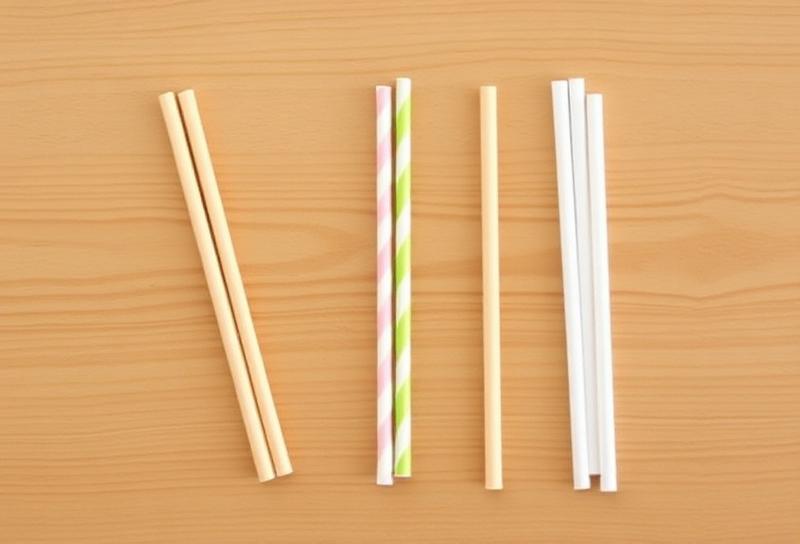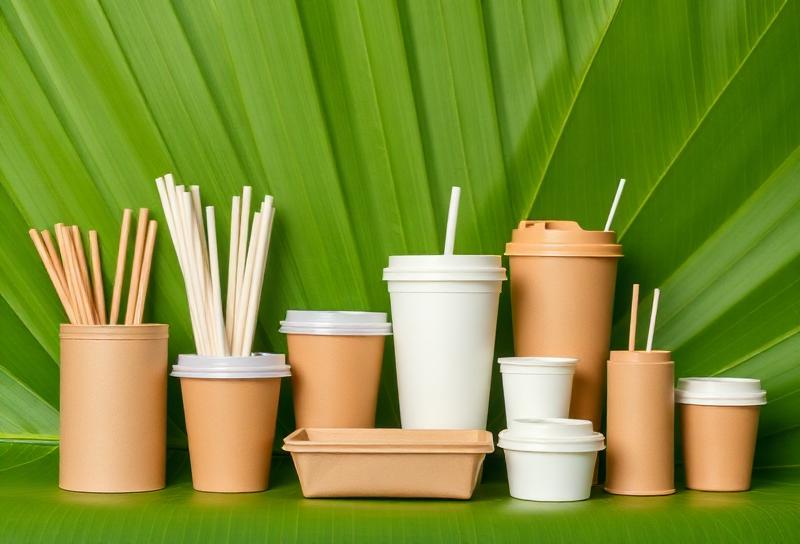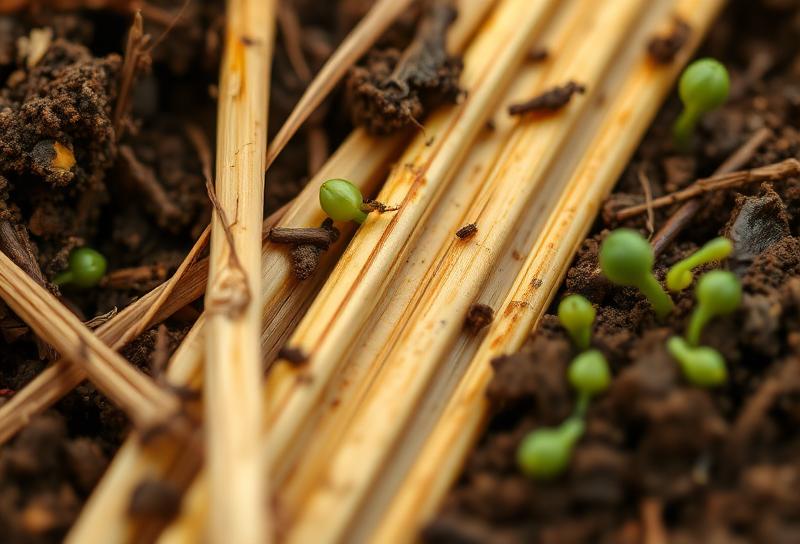
Paper straws go soggy because water moves into the paper layers and weakens the bonds holding the fibres together.
Paper straws go soggy because paper is made from flat sheets of plant fibre that absorb liquid through the cut edges, seams and surface pores. Once water moves between the layers, the straw loses stiffness and can collapse under normal sipping pressure. Moulded sugarcane fibre straws behave differently because the fibre is formed as a dense tube, not wound from paper.
What is actually happening to a paper straw?
A paper straw is usually made by winding strips of paper around a mandrel and bonding the layers together. That construction gives the straw its shape, but it also creates edges, overlaps and a seam where liquid can start to enter. In a drink, the straw is exposed from the inside and outside at the same time.
Paper fibre is hydrophilic, which means it attracts water. Once the drink reaches the fibres, the fibres swell and the sheet starts to soften. The straw may still look intact at first, but the tube wall is losing the stiffness that lets it resist bending and bite pressure.
Adhesive matters too. A paper straw relies on bonding between layers, not just the paper itself. If moisture works into those layers, the straw can feel soft, frayed or flattened before the drink is finished.
Why the cut ends fail first
The ends of a paper straw are the most exposed part of the product. Cutting a paper tube leaves open fibre ends and layer edges. Those edges act like small entry points for the drink.
This is why a paper straw can start well and then change quickly once it has been sitting in liquid. The first few sips may feel normal. After the fibres at the ends take up enough moisture, the structure begins to loosen and the mouth end can feel pulpy.
This is also why stirring with a paper straw makes the problem worse. Stirring pushes liquid over the cut edges and can flex the wall of the straw. A product that is just acceptable for straight sipping may not cope well when staff or customers use it as a stirrer.
Hot drinks, cold drinks and thick drinks
Heat speeds up softening because it helps liquid move into fibres and can make bonding weaker. A paper straw in a hot drink is dealing with moisture, temperature and mechanical pressure together. If the drink is sipped slowly, the straw has more time to absorb liquid before it is discarded.
Cold drinks create their own issues. Ice can press against the straw wall, and condensation keeps the outside wet. In cocktails, iced coffees and soft drinks, the straw may be submerged for a long time while the customer talks, eats or waits at the table.
Thick drinks are harder again. Smoothies, frappes and bubble tea require more suction, and bubble tea also needs a wider straw. A softening paper tube can flatten under that suction, which makes the drink harder to pull through. For bubble tea, a purpose-made wide straw is usually the safer choice than trying to make a standard paper straw do the job.
How sugarcane fibre straws are different
Sugarcane fibre straws are made from bagasse, the fibre left after sugarcane is processed. EcoGreen Supplies straws are 100% sugarcane fibre, with no plastic lining and no PFAS. They are moulded as a straw rather than wound from sheets of paper.
That moulded structure is the practical difference. The straw wall is formed as one fibre body, so it is not relying on paper layers staying bonded while submerged. It still uses plant fibre, but it does not behave like a rolled paper tube in a drink.
EcoGreen Supplies sugarcane straws hold up for 4+ hours in hot and cold drinks without going soggy. That makes them a better fit for venues where drinks sit on tables, travel in takeaway cups or move slowly during service. It also reduces the staff problem of replacing failed straws mid-drink.
For standard cold drinks, the Regular Sugarcane Straws are 6mm x 200mm and come in cases of 2,500 pcs for $70.00 or 5,000 pcs for $135.00. For shorter glassware, the Cocktail Sugarcane Straws are 6mm x 140mm and come in cases of 2,500 pcs for $55.00 or 5,000 pcs for $110.00. The choice is mainly about glass height and drink style, not just appearance.
Compostable does not mean the same thing as paper
A straw can be compostable and still perform differently in a drink. Compostability describes what happens under the right end-of-life conditions. It does not tell you whether the straw will stay firm in a customer’s iced latte, highball or smoothie.
EcoGreen Supplies sugarcane straws are certified commercially compostable and break down in about 90 days in a commercial composting facility. They are not certified home compostable. That distinction matters because a home compost bin does not provide the same controlled conditions as a commercial facility.
The product is also plastic-free, PFAS-free and has no lining. That is relevant for buyers who want to avoid replacing plastic straws with a paper product that depends on coatings or additives they cannot easily explain to customers. It is better to be clear about the material than to rely on broad claims about being eco-friendly.
Choosing a straw for the drink, not the trend
A venue should choose straws by use case. Standard soft drinks, juices, iced coffees and mixed drinks usually suit a regular straw. Short cocktails and spirits served in low glassware are better matched to a shorter cocktail straw.
For thicker drinks, use a wider straw. EcoGreen Supplies Jumbo Sugarcane Straws are 8mm x 200mm and come in cases of 2,500 pcs for $100.00 or 5,000 pcs for $195.00. They suit smoothies, frappes and drinks where a standard bore feels tight.
Bubble tea needs a different format again. The Bubble Tea Straws are 12mm x 220mm and come in unwrapped cases of 1,800 pcs for $160.00. Individually wrapped bubble tea straws are also 12mm x 220mm and come in cases of 1,800 pcs for $165.00, which can suit takeaway counters that want each straw protected until handover.
If your venue serves drinks that are consumed immediately at the counter, some paper straws may be tolerable. If drinks sit on tables, travel with delivery orders or include ice, heat or thick ingredients, sogginess becomes an operational issue. The right test is not whether the straw survives a quick sip, but whether it survives the way your customers actually use it.
Buying for service, storage and freight
Bulk straw buying is not only about the item price. Straws are bulky and light, so freight is often priced by the space the cartons take up rather than only by weight. EcoGreen Supplies quotes freight live at checkout from the carrier’s real rates and charges it at cost, with no markup.
Orders ship Australia-wide from NSW through the One World Courier network. Standard delivery is three to seven business days, and express delivery is one to three business days. Free warehouse pickup is available for venues that prefer to collect.
For larger orders, the bulk orders page is the simplest place to review the range and case quantities. If you are deciding between sizes, start with the drinks that cause the most complaints: hot takeaway drinks, iced drinks that sit for a while, smoothies and bubble tea. Those are the drinks most likely to expose the limits of paper.
A paper straw goes soggy because its sheet structure absorbs liquid and loses stiffness. A moulded sugarcane fibre straw is still plant fibre, but it is built differently and is better suited to longer drink times. For hospitality operators, the point is not to win a material debate; it is to put a straw behind the counter that works through service.
Common questions
Why do paper straws go soggy so quickly?
Paper straws go soggy because liquid enters the paper fibres, especially through the cut ends, seams and layer edges. The fibres swell, the bonding between layers weakens, and the tube loses stiffness. Heat, stirring, ice and long drink times make the problem more noticeable because they give liquid more chances to move into the straw wall.
Are sugarcane straws just paper straws with a different name?
No. EcoGreen Supplies sugarcane straws are made from 100% sugarcane fibre, also called bagasse, and are moulded rather than wound from paper sheets. They are plastic-free, PFAS-free and have no lining. The moulded fibre structure helps them hold up for 4+ hours in hot and cold drinks without going soggy.
Are sugarcane fibre straws commercially compostable?
Yes. EcoGreen Supplies sugarcane fibre straws are certified commercially compostable and break down in about 90 days in a commercial composting facility. They are not certified home compostable, so they should not be sold or described that way. The correct end-of-life pathway depends on access to commercial composting in your area.
What straw size should a cafe or bar choose instead of paper?
Most standard drinks suit a 6mm x 200mm regular straw, while short cocktails often suit a 6mm x 140mm cocktail straw. Thicker drinks generally need the 8mm x 200mm jumbo straw. Bubble tea should use a 12mm x 220mm bubble tea straw, available wrapped or unwrapped depending on your service setup.
What if the straw does not suit our drink menu?
It is worth matching the straw to the drink before ordering in bulk. A standard straw may not be right for thick smoothies or bubble tea, and a long straw may look awkward in short glassware. If you are unsure, contact [email protected] with your main drink types and service format before choosing a case.