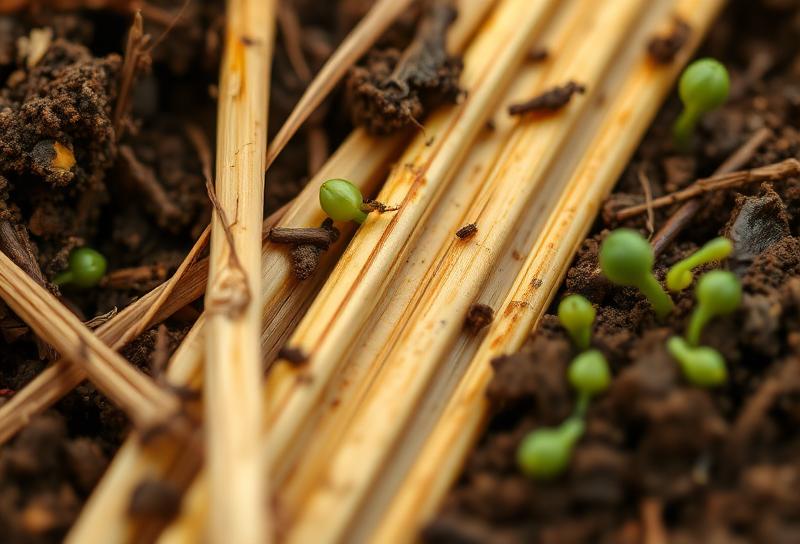
A practical comparison of sugarcane and wheat straws for hospitality venues choosing a plastic-free straw.
Sugarcane and wheat straws are both plant-based alternatives to plastic, but they behave differently behind a counter. Wheat straws are cut from hollow wheat stems, so they are naturally narrow and variable. Sugarcane straws are formed from bagasse fibre, which gives venues more consistent sizing, a smoother drinking feel, and options for regular, cocktail, jumbo and bubble tea drinks.
The short version for venue buyers
Wheat straws can suit venues that only need a small, narrow straw for water, simple mixed drinks or low-volume service. Their appeal is that the straw is close to an unprocessed plant stem. The trade-off is that the bore, length and straightness can vary because the stem sets the shape.
Sugarcane straws are a better fit when a venue needs a predictable straw across a drinks menu. EcoGreen Supplies sugarcane straws are made from 100% sugarcane fibre, also called bagasse. They are plastic-free, PFAS-free and made without a lining.
For cafes, bars, restaurants and bubble tea shops, the main buying question is not just what the straw is made from. It is whether staff can grab the same straw all shift and know it will work in the drink being served. Consistency matters when you are training casual staff, setting up a bar station or ordering by the carton.
What are wheat straws?
Wheat straws are usually made from the hollow stem of the wheat plant after the grain has been harvested. The stem is cut, cleaned and used as a drinking straw. Because it is a natural stem, the straw has a built-in hollow centre rather than being moulded or extruded into a fixed bore.
That natural structure is both the selling point and the limitation. A wheat straw can look simple and low-intervention, which some venues like for short drinks or table water. It can also be narrow, slightly irregular, and less suitable for thick drinks, crushed ice, garnishes or pearls.
Wheat straws also raise more customer questions than some other plant-based options. Staff may be asked whether the straw contains gluten or whether it is safe for customers with wheat allergies. A supplier should be able to provide a clear answer for the specific product, because allergen comfort is an operational issue, not just a packaging claim.
What are sugarcane straws?
Sugarcane straws are made from bagasse, the fibre left after sugarcane has been crushed for juice. Instead of using a hollow plant stem, the fibre is formed into a straw. That gives the manufacturer more control over the finished size, bore and wall structure.
EcoGreen Supplies sugarcane straws are 100% sugarcane fibre, with no plastic, no PFAS and no lining. They are certified commercially compostable and are designed for hospitality service rather than novelty use. They are not certified home compostable.
The practical benefit is range. A venue can use regular sugarcane straws for standard cold drinks, cocktail sugarcane straws for short glasses, jumbo sugarcane straws for thicker drinks, and bubble tea straws for pearls and sealed cups. That is harder to do with wheat stems because the plant stem limits the bore.
Comparing drink performance
A wheat straw is often narrow because it follows the wheat stem. That can be fine for still water, neat spirits with a mixer, or simple iced drinks. It is less useful where the drink includes pulp, crushed ice, thick syrups, smoothies, milkshakes or toppings.
Sugarcane straws are available in defined hospitality sizes. Regular Sugarcane Straws are 6mm x 200mm, Cocktail Sugarcane Straws are 6mm x 140mm, Jumbo Sugarcane Straws are 8mm x 200mm, and Bubble Tea Straws are 12mm x 220mm. Those options let a venue match the straw to the drink instead of forcing one narrow format across the menu.
EcoGreen Supplies sugarcane straws hold up for 4+ hours in hot and cold drinks without going soggy. That matters for dine-in service, takeaway coffees with lids, iced drinks that sit on tables, and busy service periods where a drink may not be consumed immediately. A straw that collapses early creates remakes, complaints and extra staff handling.
Allergen and customer questions
Wheat straws can prompt questions because they come from the wheat plant. Even when a supplier says a wheat stem straw is made from the stalk rather than the grain, some customers will still be cautious. For a venue, the issue is whether staff have a clear, documented answer they can give without guessing.
Sugarcane straws avoid the wheat-specific question because they are made from sugarcane fibre, not wheat. That does not mean every customer concern disappears, but it removes a common point of friction for venues serving a broad public. For operators, fewer ambiguous counter conversations can be a real advantage.
If your venue serves schools, health care sites, events, airlines, large corporate catering or any setting with strict allergen procedures, ask suppliers for written product information before ordering. Do not rely on a generic plant-based claim. Plant-based only tells you the origin of the material, not whether it fits your allergen policy.
Compostability and disposal
EcoGreen Supplies sugarcane straws are certified commercially compostable. In a commercial composting facility, they break down in about 90 days. They are not certified home compostable, and they should not be sold to customers as if they will reliably compost in a backyard bin.
Wheat straws may be promoted as compostable because they are plant stems, but a venue should still ask what certification applies to the exact product. A general natural-material claim is not the same as a recognised commercial compostability certification. This distinction matters if your waste contractor or council program requires documentation.
For most hospitality venues, compostability only works if the waste pathway exists. If straws go into general waste, neither wheat nor sugarcane gets the benefit of commercial composting. The honest claim is about what the material is certified to do under the right processing conditions.
Range, cartons and ordering
A narrow wheat straw may be enough if your venue has a short drinks list and mainly serves water or simple mixed drinks. It may not be the right fit if your team needs a straw for smoothies, frappes, thick juices, bubble tea, tall takeaway cups or drinks with ice and garnish. Menu fit should come before the material story.
EcoGreen Supplies sells sugarcane straws in bulk cartons for commercial use. Regular Sugarcane Straws are available as 2,500 pcs for $70.00 or 5,000 pcs for $135.00. Cocktail Sugarcane Straws are available as 2,500 pcs for $55.00 or 5,000 pcs for $110.00.
Jumbo Sugarcane Straws are available as 2,500 pcs for $100.00 or 5,000 pcs for $195.00. Individually Wrapped Bubble Tea Straws are 12mm x 220mm and sold as 1,800 pcs for $165.00. Bubble Tea Straws without wrapping are 12mm x 220mm and sold as 1,800 pcs for $160.00.
For venues ordering across multiple sites, it is worth standardising the straw types that match the menu. A bar may only need regular and cocktail straws. A cafe with smoothies may add jumbo straws, while a bubble tea shop will need the 12mm x 220mm format; both wrapped and unwrapped options are available through the bubble tea straw range.
Freight and storage considerations
Straws are bulky for their weight, so freight is often driven by carton volume rather than how heavy the order feels. That is normal for courier networks. It is one reason a live freight quote is more accurate than a flat rate that has to hide the cost somewhere else.
EcoGreen Supplies ships Australia-wide from NSW through the One World Courier network. Standard delivery is three to seven business days, and express delivery is one to three business days. Freight is quoted live at checkout from the carrier’s real rates and charged at cost, with no markup.
There is no flat shipping rate and no free-shipping threshold. Free warehouse pickup is available for venues that prefer to collect. Larger orders and regular supply can be handled through bulk ordering, especially if you want to keep the same straw types on hand across rosters and trading periods.
Which should you choose?
Choose wheat straws if your priority is a simple, minimally processed-looking stem straw and your drinks do not need a wide bore. They can suit narrow use cases. They are less convincing as a single venue-wide solution for menus with thick drinks, toppings, or customers who ask detailed allergen questions.
Choose sugarcane straws if you need a plastic-free straw with consistent sizing, commercial compostability certification and a range that covers more than one drink type. The formed bagasse structure gives suppliers more control over dimensions than a natural wheat stem can. For many hospitality operators, that predictability is the deciding factor.
If you are comparing options for a real menu, start with the drinks rather than the sustainability wording. List your standard cups, short glasses, thick drinks and any bubble tea or smoothie items. Then choose the straw bore and length that match the way staff actually serve those drinks.
Common questions
Are sugarcane straws better than wheat straws for cafes?
Sugarcane straws are usually more practical for cafes with a mixed drinks menu because they come in consistent sizes for regular drinks, thicker drinks and bubble tea. Wheat straws can work for simple drinks, but the natural wheat stem limits the bore. If your cafe serves smoothies, iced drinks or drinks with pulp, a formed sugarcane straw is often the safer operational choice.
Do wheat straws contain gluten or cause allergy issues?
Wheat straws are made from the wheat plant stem, so buyers should ask the wheat straw supplier for product-specific allergen information. Do not assume the answer from a generic plant-based claim. For venues with strict allergen procedures, written documentation matters because staff may be asked direct customer questions during service.
Are sugarcane straws home compostable?
EcoGreen Supplies sugarcane straws are certified commercially compostable, not certified home compostable. They break down in about 90 days in a commercial composting facility. Venues should describe them as commercially compostable and avoid promising backyard composting, marine breakdown or landfill breakdown, because those are different conditions and are not the certification being supplied.
Will sugarcane straws go soggy in hot drinks?
EcoGreen Supplies sugarcane straws hold up for 4+ hours in hot and cold drinks without going soggy. That makes them suitable for normal cafe, bar and takeaway service where a drink may sit for a while before it is finished. For very thick drinks or toppings, choose the correct wider format rather than relying on a regular narrow straw.
How do I choose between regular, jumbo and bubble tea sugarcane straws?
Use regular 6mm x 200mm straws for standard drinks, cocktail 6mm x 140mm straws for short glasses, jumbo 8mm x 200mm straws for thicker drinks, and 12mm x 220mm bubble tea straws for pearls or sealed cups. The best choice depends on the drink’s thickness, cup height and whether anything solid needs to pass through the straw.