A practical guide to NSW plastic straw ban rules for venues choosing compliant non-plastic straw alternatives.
NSW plastic straw ban rules mean hospitality venues should not supply prohibited single-use plastic straws in ordinary service. For most cafes, bars, restaurants and takeaway counters, the practical replacement is a non-plastic straw that suits the drink, holds up during service and can be bought in reliable bulk quantities. Sugarcane-fibre straws are one option because they are plastic-free, PFAS-free and certified commercially compostable.
What the NSW plastic straw ban means at the counter
For a venue, the rule is not an abstract sustainability policy. It affects what staff can hand over with iced coffees, cocktails, soft drinks, smoothies and takeaway cups. If a straw is offered as part of normal service, the venue needs to be confident it is not a banned single-use plastic item.
That is why EcoGreen Supplies requires an NSW declaration at checkout. It is a practical compliance step for orders connected to NSW supply, and it helps make clear that the buyer is choosing an alternative to prohibited plastic straws rather than restocking old plastic stock.
The NSW ban sits alongside the day-to-day realities of hospitality service. Staff still need a straw that works in the drink. Operators still need carton counts that match ordering cycles, storage space and weekly use, without turning every shift change into a compliance discussion.
What counts as a practical replacement?
A practical replacement needs to do more than avoid plastic. It needs to be fit for the drinks on your menu, simple for staff to identify, and consistent enough that customers do not complain about the straw before they comment on the drink.
EcoGreen Supplies sugarcane straws are made from 100% sugarcane fibre, also called bagasse. They are plastic-free, PFAS-free and have no lining. They are certified commercially compostable and break down in about 90 days in a commercial composting facility.
They are not certified home compostable. That distinction matters for venues because end-of-life claims are often repeated by staff and customers. If your waste contractor does not collect commercial compostables, treat the compostability claim as a material certification, not a guarantee about what happens in your general waste bin.
The straws are designed to hold up for 4+ hours in hot and cold drinks without going soggy. That makes them suitable for table service, takeaway drinks that sit for a while, and back-of-bar use where staff may prepare rounds before every drink is collected.
Matching the straw to the drink
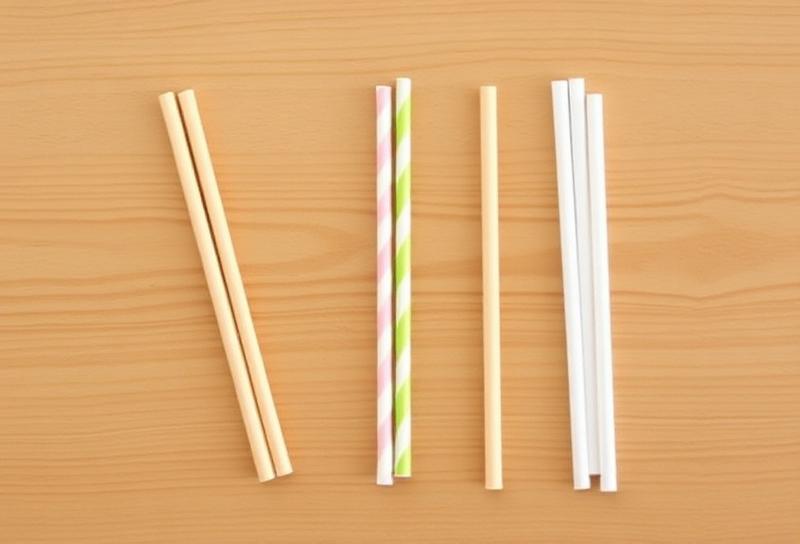
A regular drinking straw suits most everyday cold drinks and many hot drinks served with lids. EcoGreen Supplies Regular Sugarcane Straws are 6mm x 200mm and come in 2,500 pcs for $70.00 or 5,000 pcs for $135.00. For many cafes, this is the standard behind-the-counter option.
Cocktail straws are shorter and suit rocks glasses, short mixed drinks and venues that do not want a tall straw sitting awkwardly above the rim. Cocktail Sugarcane Straws are 6mm x 140mm and come in 2,500 pcs for $55.00 or 5,000 pcs for $110.00. Bars often keep these separate from regular straws so staff do not overuse the longer format.
Jumbo straws suit thicker drinks where a regular straw feels too narrow, such as smoothies, frappes and some milk-based takeaway drinks. Jumbo Sugarcane Straws are 8mm x 200mm and come in 2,500 pcs for $100.00 or 5,000 pcs for $195.00. They are not the right choice for bubble tea pearls, because the bore is smaller than a bubble tea straw.
Bubble tea needs its own format. Bubble Tea Straws are 12mm x 220mm and come in 1,800 pcs for $160.00 unwrapped, or 1,800 pcs for $165.00 individually wrapped. Shops that run sealed cups, toppings and pearls should start here rather than trying to make a jumbo straw do the wrong job.
You can compare the main options on the product pages for regular sugarcane straws, jumbo sugarcane straws and bubble tea straws. The decision should follow the drink, not the label on the carton.
Why the declaration at checkout matters
The NSW declaration at checkout is there because compliance is part of the purchase, not something that happens after the carton arrives. If a business is buying straws for use or supply in NSW, the supplier and the buyer both need clarity about the product being ordered and the intended compliant use.
For a venue owner, that declaration is also a useful internal checkpoint. It prompts the person placing the order to confirm they are not buying a prohibited plastic straw by habit. In businesses with several managers or rotating buyers, a small checkpoint can prevent the wrong stock from reappearing on the shelf.
Keep a record of what you buy. Product pages, invoices and ordering records can help show that your venue is using non-plastic alternatives. That is not a substitute for legal advice, but it is a sensible operating habit for any business that has to explain its purchasing decisions.
If you are ordering across more than one site, the bulk orders page is the better place to start. It lets you think in cases and formats rather than small top-ups, which is usually how multi-site hospitality purchasing actually works.
Freight and stock planning for NSW venues
Sugarcane straws are light, but cartons still take up space. Freight for bulky-light goods is often priced on the room the cartons occupy in a vehicle, not just their weight. That is why freight is best calculated live rather than guessed in a product description.
EcoGreen Supplies ships Australia-wide from NSW through the One World Courier network. Standard shipping is three to seven business days, and express shipping is one to three business days. Freight is quoted live at checkout from the carrier's real rates and charged at cost, with no markup.
There is no flat shipping rate and no free-shipping threshold. Free warehouse pickup is available for buyers who can collect. For venues that run close to empty before ordering, express freight may be less disruptive than swapping to a poor substitute at short notice.
A simple way to plan is to order by drink type. Put regular straws, cocktail straws, jumbo straws and bubble tea straws into separate par levels if you use more than one size. It avoids the common problem where a venue has plenty of the wrong straw and none of the format staff actually need.
Staff training without making it complicated
Staff do not need a lecture on packaging law to serve a compliant straw. They need to know which straw goes with which drink, where the stock is kept, and what to say if a customer asks why the venue no longer uses plastic straws.
A useful staff line is plain: these straws are made from sugarcane fibre, not plastic, and they are certified commercially compostable in a commercial composting facility. If asked about home composting, the honest answer is that they are not certified home compostable. Clear limits build more trust than broad claims.
Back-of-house labelling helps. Mark cartons by use, such as regular, cocktail, jumbo and bubble tea. If staff have to guess by sight during a busy service, the wrong straw will be used, especially between regular and cocktail formats.
For NSW buyers comparing supply options by location, the sugarcane straws Melbourne and sugarcane straws Brisbane pages may still be useful if you operate interstate sites as well as NSW venues. The product formats remain the same, but freight and ordering patterns can differ by site.
When sugarcane straws may not be the right fit
Sugarcane straws are not a solution for every waste system. If your venue markets itself around a specific composting pathway, check that your commercial organics collector accepts certified commercially compostable fibre straws. Certification and actual collection are related, but they are not the same thing.
They are also not the right answer if your drink needs a spoon, scoop or wide utensil rather than a straw. Some desserts, loaded shakes and thick toppings are better served with the correct cutlery. Choosing the wrong straw to make a sustainability point usually creates waste and customer frustration.
For bubble tea, do not substitute a regular or jumbo straw for a 12mm x 220mm bubble tea straw. Pearls and toppings need the wider format. If hygiene presentation is important for self-serve counters or delivery bags, the individually wrapped bubble tea straw may be the better operational choice.
The practical takeaway for NSW venues
The safest operational approach is to remove old plastic straw stock from normal service and replace it with a fit-for-purpose non-plastic option. For many venues, that means regular straws for everyday drinks, cocktail straws for short glasses, jumbo straws for thicker drinks and bubble tea straws for pearls and sealed cups.
EcoGreen Supplies sugarcane straws are made for commercial service, not as a consumer novelty. They come in case quantities, ship Australia-wide from NSW, and are supplied with live freight pricing at checkout. For questions about product choice or ordering, contact [email protected].
Common questions
Can my NSW venue still give customers plastic straws?
For ordinary hospitality service in NSW, venues should not supply prohibited single-use plastic straws. A practical replacement is a non-plastic straw matched to the drink type. EcoGreen Supplies sugarcane straws are made from 100% sugarcane fibre, are plastic-free and PFAS-free, and are certified commercially compostable for commercial composting facilities.
Are sugarcane straws compostable in NSW?
EcoGreen Supplies sugarcane straws are certified commercially compostable and break down in about 90 days in a commercial composting facility. They are not certified home compostable. If your venue wants composting outcomes rather than only a compliant non-plastic material, check whether your waste contractor accepts certified commercially compostable fibre straws.
Which sugarcane straw should I order for my venue?
For most takeaway drinks, use a 6mm x 200mm regular straw. For short mixed drinks, use a 6mm x 140mm cocktail straw. For smoothies and thicker drinks, use an 8mm x 200mm jumbo straw. For bubble tea pearls and sealed cups, use a 12mm x 220mm bubble tea straw instead of trying to make a narrower straw work.
Why do I have to complete an NSW declaration at checkout?
The NSW declaration at checkout is a compliance checkpoint for buyers ordering in connection with NSW supply. It helps confirm that the order is for non-plastic sugarcane-fibre straws rather than prohibited plastic stock. It also creates a clear purchasing step for businesses where more than one manager may place supply orders.
What if sugarcane straws do not suit my drinks?
Sugarcane-fibre straws are not the right fit if your waste claim depends on home compostability, because they are not certified home compostable. They also may not suit very thick desserts that need a spoon or bubble tea drinks unless you choose the 12mm x 220mm bubble tea format. Match the product to the service case.