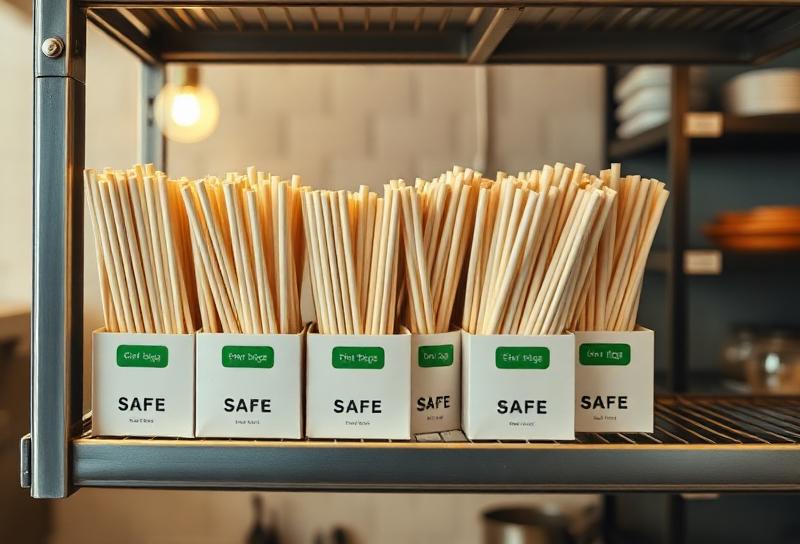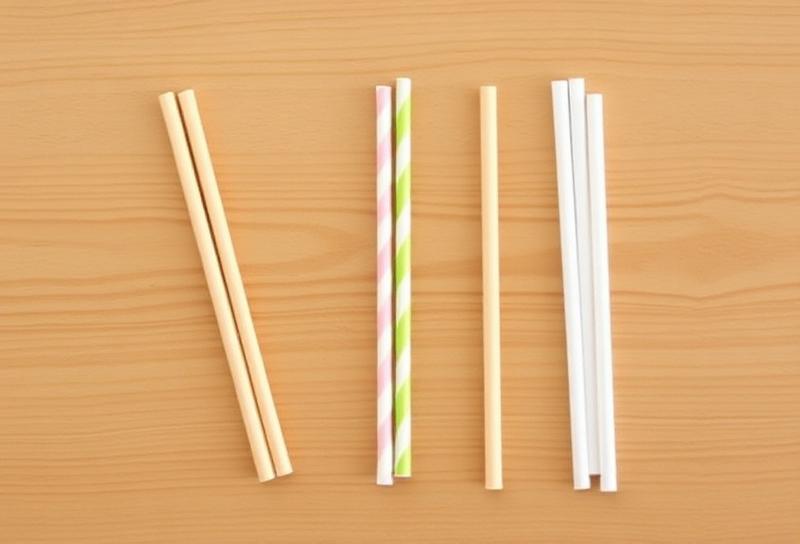
How Australian venues can test compostable straw samples before ordering bulk cases for service.
Compostable straw samples are worth testing before a bulk order if your venue serves thick drinks, hot drinks, long sittings or takeaway at volume. For Australian cafes, bars, restaurants and bubble tea shops, the useful test is not whether a straw looks eco-friendly. It is whether it holds up in your actual cups, lids, drinks and service window.
What a straw sample should prove
A sample should answer operational questions before you commit shelf space and money to cartons. Does the straw fit your cup lids without forcing staff to push or twist it? Does it stay firm long enough for the way your customers drink? Does it suit the drinks that make up most of your trade, not just the easy ones?
Sugarcane fibre straws are made for venues that want a plastic-free option without moving to paper. EcoGreen Supplies straws are 100% sugarcane fibre, also called bagasse. They are plastic-free, PFAS-free and have no lining.
They are certified commercially compostable and break down in about 90 days in a commercial composting facility. They are not certified home compostable. That distinction matters if you are writing menu notes, staff talking points or waste signage.
Test the straw in the drinks you actually sell
Run samples through your normal service, not a clean office desk test. Put them in iced coffee, soft drinks, cocktails, smoothies, frappes or bubble tea depending on your menu. If a drink sits at the pass, travels in a delivery bag or stays on a table through a meal, include that situation in the trial.
EcoGreen Supplies sugarcane straws hold up 4+ hours in hot and cold drinks without going soggy. That makes them suitable for most dine-in and takeaway service windows. The more useful question is which diameter and length match each drink category behind your counter.
A regular straw is not the right tool for pearls, jellies or very thick blended drinks. A bubble tea shop should test a 12mm straw with the actual toppings it sells. A bar may find a shorter cocktail straw is better for short glasses than a full-length straw that sits awkwardly above the rim.
Which sample should your venue try first?
Start with the straw that covers your highest-volume drink, then test any edge cases. For many cafes, that means a regular drinking straw for iced drinks. For bars, it may be a cocktail straw and a jumbo straw. For bubble tea, it should be a 12mm bubble tea straw before anything else.
EcoGreen Supplies range options are straightforward: Regular Sugarcane Straws - 6mm x 200mm - 2,500 pcs $70.00, 5,000 pcs $135.00. Cocktail Sugarcane Straws - 6mm x 140mm - 2,500 pcs $55.00, 5,000 pcs $110.00. Jumbo Sugarcane Straws - 8mm x 200mm - 2,500 pcs $100.00, 5,000 pcs $195.00.
For bubble tea service, the range includes Individually Wrapped Bubble Tea Straws - 12mm x 220mm - 1,800 pcs $165.00 and Bubble Tea Straws (unwrapped) - 12mm x 220mm - 1,800 pcs $160.00. Wrapped straws suit venues that need a more controlled handout process or takeaway setup. Unwrapped straws suit counters where staff dispense straws directly.
You can view the main case options on the bulk orders page, or check individual products such as regular sugarcane straws, jumbo sugarcane straws and bubble tea straws. Use the product dimensions as the starting point, then confirm with your own cups and lids.
A practical sample test for staff
Give staff a simple checklist rather than asking whether they “like” the straw. Personal preference is less useful than whether the straw works during a rush. Keep the trial close to normal service so you see the small problems that appear when people are busy.
- Check fit through your most common flat lids, dome lids and sealed film where relevant.
- Leave a straw in a cold drink and a hot drink through the longest normal service window.
- Test the straw with ice, fruit pulp, toppings or blended texture if those are part of your menu.
- Ask staff whether the straw slows service at the point of handout or packing.
- Note whether customers need a different straw for any drink category.
A good sample trial should help you reduce the number of straw types you keep on hand. Some venues only need one size. Others need a regular straw for standard cold drinks and a jumbo or bubble tea straw for thicker drinks. Stocking too many near-identical options makes ordering and counter storage harder.
Cost is not just the case price
The case price matters, but so does whether the straw prevents remakes, complaints and staff workarounds. A straw that is slightly cheaper but goes soft before the customer finishes can create a bigger operational cost than it saves. This is why testing in real drinks is more useful than comparing product photos.
For bulk buyers, case quantity also affects how often you reorder and how much space the cartons take in dry storage. A small cafe may want to avoid overfilling a back room. A busy bubble tea shop may prefer fewer reorder points if it has the space to hold stock.
Freight should be checked before you compare landed costs. EcoGreen Supplies ships Australia-wide from NSW via the One World Courier network. Standard delivery is three to seven business days, and express delivery is one to three business days.
Freight is quoted live at checkout from the carrier’s real rates and charged at cost, with no markup. There is no flat shipping rate and no free-shipping threshold. Free warehouse pickup is available for venues that can collect.
What to ask before ordering bulk
Before moving from samples to cases, confirm the straw type, pack size and delivery method with the person who handles purchasing. Also confirm where used straws will go after service. Commercial compostability only helps if your waste pathway can send the material to a suitable commercial composting facility.
If your venue does not have access to commercial composting, the straw can still be a plastic-free and PFAS-free choice, but it should not be presented as home compostable. Avoid vague wording on signage. A clear statement such as certified commercially compostable is more accurate and more defensible.
For multi-site operators, sample testing should happen at the site with the hardest conditions. That might be the busiest takeaway counter, the venue with the longest table sittings or the store using the tightest lid fit. If the straw works there, rollout decisions are easier.
If you need help matching a straw to your drink menu, contact [email protected] with your cup style, drink types and whether you need wrapped or unwrapped straws. For location-specific ordering information, you can also read the Melbourne buying page or Brisbane buying page.
Common questions
Can I get compostable straw samples in Australia before buying bulk?
Venues should test compostable straw samples before committing to bulk cases, especially for thick drinks, hot drinks, takeaway and sealed lids. The important test is how the straw performs in your own cups and drinks. Contact [email protected] with your venue type, drink menu and the straw sizes you want to trial.
Are sugarcane straws really compostable, or is it greenwashing?
EcoGreen Supplies sugarcane straws are certified commercially compostable and break down in about 90 days in a commercial composting facility. They are made from 100% sugarcane fibre, are plastic-free, PFAS-free and have no lining. They are not certified home compostable, so venues should not describe them that way.
Which compostable straw sample should a cafe or bar test first?
Most cafes should start by testing a 6mm x 200mm regular straw in iced drinks and any takeaway cups they use. Bars may also want to test a 6mm x 140mm cocktail straw for short glasses and an 8mm x 200mm jumbo straw for thicker mixed drinks. The right choice depends on cup height, lid fit and drink texture.
Do compostable straws go soggy in customer drinks?
EcoGreen Supplies sugarcane straws hold up 4+ hours in hot and cold drinks without going soggy. A venue should still test them in its own menu, because ice, pulp, toppings, blended texture and long takeaway times can change what staff and customers experience. Sampling is the best way to find the correct size.
How is shipping handled for bulk compostable straws in Australia?
EcoGreen Supplies ships Australia-wide from NSW via the One World Courier network. Standard delivery is three to seven business days, and express delivery is one to three business days. Freight is quoted live at checkout from the carrier’s real rates and charged at cost, with no markup. Free warehouse pickup is also available.