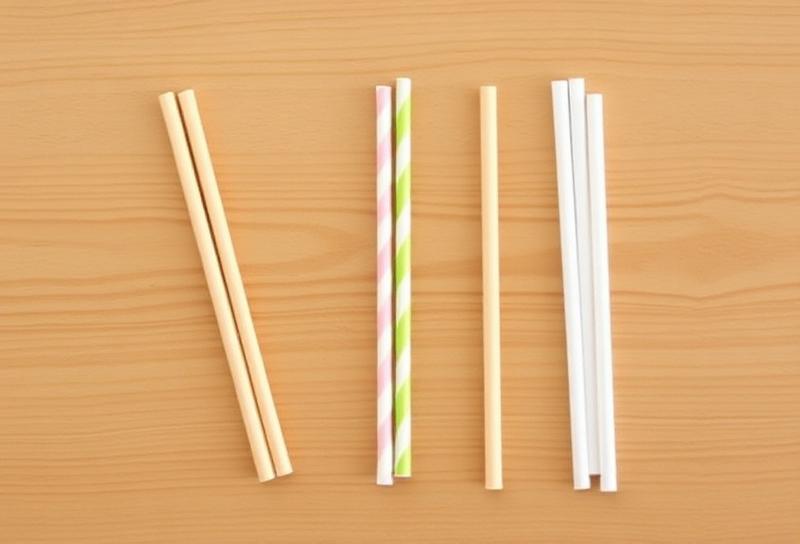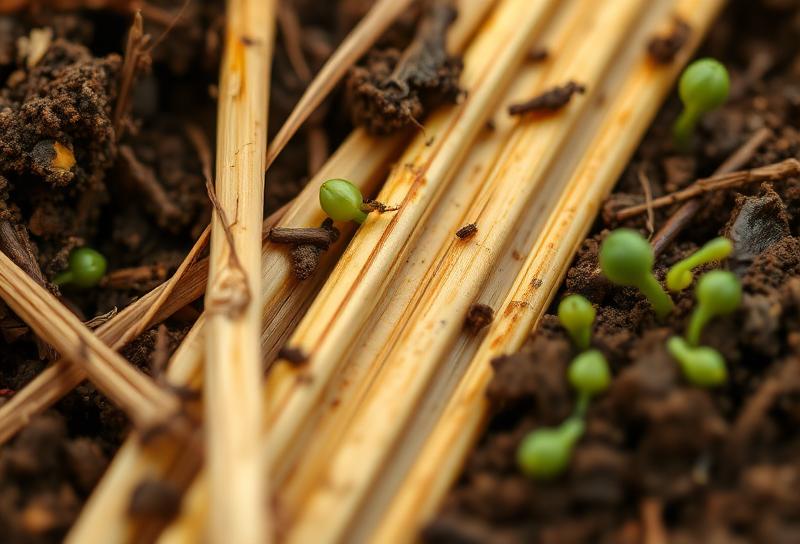
Many paper straws are not compostable in practice because coatings, binders and wet-strength treatments can limit accepted disposal options.
Many paper straws are not automatically compostable. Some are treated with coatings, binders, inks or glues that a composting facility may not accept, and some are only suitable for landfill after use. For a hospitality venue, the useful question is not whether a straw looks like paper, but whether the exact product is certified for commercial composting and accepted by the waste pathway you use.
Paper does not equal compostable
A paper straw can be made from plant fibre and still fail as compostable packaging. Straws need to stay intact in liquid, so manufacturers often add wet-strength treatments, adhesives or coatings. Those additions can change how the straw behaves in a composting facility.
The problem for venues is that most customers and staff cannot see those treatments. A straw may look plain and brown, but the relevant information is in the supplier documentation. If the supplier cannot tell you what certification applies, and under what conditions, treat the compostability claim as incomplete.
Recycling is not a simple fallback either. Used straws are small, wet and contaminated with drink residue. Many recycling systems do not want them, even when the base material is paper. That leaves composting or landfill, depending on the product and the waste collection available to the venue.
Why PFAS, coatings and glue matter
PFAS-free matters because some food packaging has used fluorinated treatments for grease or moisture resistance. A composting claim is harder to trust when the product relies on persistent chemical coatings or when the supplier will not state whether PFAS are present. A venue should be able to ask that question and get a direct answer.
Glues and binders also matter. A paper straw is usually formed by winding layers of paper together, and those layers need to hold while the straw is in a drink. The adhesive system may affect whether the finished straw is accepted into composting, especially when the claim is only about the paper component rather than the whole straw.
Coatings can make a straw perform better in the cup but harder to assess at disposal. Some coatings are used to slow water absorption. If the product claim only says "made from paper" or "eco", it does not tell you whether the coating is compatible with commercial composting.
This is why documented certification is more useful than broad material language. A certified commercially compostable product has been assessed as a finished product for a commercial composting process. A loose claim about paper content is not the same thing.
What should a venue ask before buying paper straws?
Ask for the certification that applies to the finished straw, not just the raw paper. The certificate or supplier statement should identify commercial compostability clearly. If a product is only described as biodegradable, sustainable or plant-based, that is not enough for a back-of-house disposal decision.
Ask whether the straw is PFAS-free. The answer should not be vague. If the supplier does not know, that is a risk for venues trying to keep their packaging claims clean and defensible.
Ask where the used straws are meant to go. Commercially compostable packaging needs a suitable commercial composting collection or facility. If your venue only has general waste for front-of-house packaging, a compostable straw may still end up in landfill, even if the product itself is properly certified.
Ask how long the straw holds up in real service. A straw that fails quickly creates customer complaints and staff workarounds. For iced drinks, cocktails, juices, smoothies and takeaway service, performance in the cup matters as much as the end-of-life claim.
A clearer alternative to generic paper straws
EcoGreen Supplies sugarcane straws are made from 100% sugarcane fibre, also called bagasse. They are plastic-free, PFAS-free and made with no lining. They are certified commercially compostable and are designed to break down in about 90 days in a commercial composting facility.
They are not certified home compostable. That distinction matters. A cafe should not tell customers to put them in a backyard compost bin unless the product has that certification, and these straws do not.
In service, the straws hold up for 4+ hours in hot and cold drinks without going soggy. That makes them suitable for venues that have had poor results with some paper straws, especially where drinks sit for a while or customers take them away.
The regular sugarcane straw is 6mm x 200mm and suits water, soft drinks, iced coffee and many standard cold drinks. Cases are available as 2,500 pcs $70.00 or 5,000 pcs $135.00 through Regular Sugarcane Straws.
The cocktail sugarcane straw is 6mm x 140mm and suits short glasses, mixed drinks and bar service where a full-length straw is unnecessary. Cases are available as 2,500 pcs $55.00 or 5,000 pcs $110.00 through Cocktail Sugarcane Straws.
The jumbo sugarcane straw is 8mm x 200mm and suits thicker drinks where a regular straw feels too narrow. Cases are available as 2,500 pcs $100.00 or 5,000 pcs $195.00 through Jumbo Sugarcane Straws.
For bubble tea, the 12mm x 220mm sugarcane straw is available wrapped or unwrapped. The individually wrapped version is supplied in 1,800 pcs $165.00, while the unwrapped version is supplied in 1,800 pcs $160.00. You can compare both options in the Bubble Tea Straws range.
When compostable straws are the wrong answer
A commercially compostable straw is only part of the system. If your venue has no composting collection, the straw may still go to general waste after use. That does not make the certification false, but it does limit the environmental benefit your venue can honestly claim.
For events, check the waste contractor before ordering. Some sites collect all food service packaging as general waste, even when the items are certified compostable. Others have a dedicated organics stream and strict rules about what can be included.
For dine-in venues, staff training matters. A compostable straw in the wrong bin is a common failure point. The best product choice is the one that matches both the drink and the disposal route you can actually manage.
If you cannot access a commercial composting pathway, you can still choose plastic-free and PFAS-free straws for service reasons and material preference. Just be careful with customer-facing language. Say the straw is certified commercially compostable, not that it will compost anywhere.
Ordering for a hospitality venue
Bulk straw buying is usually about matching sizes to the drinks you sell. Most cafes and restaurants use regular straws for standard drinks, cocktail straws for shorter glassware, and jumbo straws for thicker drinks. Bubble tea shops need the 12mm x 220mm format for pearls and toppings.
EcoGreen Supplies ships Australia-wide from NSW through the One World Courier network. Standard delivery is three to seven business days, and express delivery is one to three business days. Freight is quoted live at checkout using the carrier's real rates and charged at cost with no markup.
There is no flat shipping rate and no free-shipping threshold. That is because cartons of straws are bulky and light, so freight is often priced on carton volume rather than weight. Free warehouse pickup is available for venues that prefer to collect.
For larger purchasing, venues can review bulk orders or contact [email protected] before ordering. If you are replacing paper straws because of sogginess or unclear disposal claims, ask for the exact size that matches your current drink menu rather than buying one format for every use.
Common questions
Are paper straws actually compostable after use?
Some paper straws may be commercially compostable, but paper alone does not prove it. The finished straw can include coatings, glues, inks or wet-strength treatments that affect composting acceptance. A hospitality venue should ask for certification for the finished product and check whether its waste contractor accepts that item in a commercial composting stream.
Can I put commercially compostable straws in home compost?
Do not assume that commercially compostable straws are suitable for home compost. Commercial composting uses managed conditions that are different from a backyard compost bin. EcoGreen Supplies sugarcane straws are certified commercially compostable, but they are not certified home compostable, so venues should not market them as home compostable.
Why do some paper straws say eco but still go to landfill?
Terms like eco, green, biodegradable and plant-based do not tell you where a used straw can be processed. If a paper straw lacks recognised commercial composting certification, or if the venue has no composting collection, it may be disposed of as general waste. The disposal pathway matters as much as the material claim.
Are sugarcane straws better than paper straws for cafes?
Sugarcane straws can be a better fit when a venue wants a plastic-free, PFAS-free straw with a clearer commercial composting claim. EcoGreen Supplies sugarcane straws are made from 100% sugarcane fibre with no lining and hold up for 4+ hours in hot and cold drinks. The right choice still depends on drink type and waste collection.
What should I ask a supplier before switching straws?
Ask whether the finished straw is certified commercially compostable, whether it is PFAS-free, what material it is made from, and whether it has any lining. Ask how it performs in hot and cold drinks, and confirm the case size that suits your menu. If the supplier cannot answer plainly, the claim may not be useful for a business buyer.